
How can my birth partner prepare to help me give birth?
Here’s a hill I’ll die on: your birth partner can make or break your birth experience, and that all depends on the preparation. When a birth partner knows what to do, that’s when the magic happens…
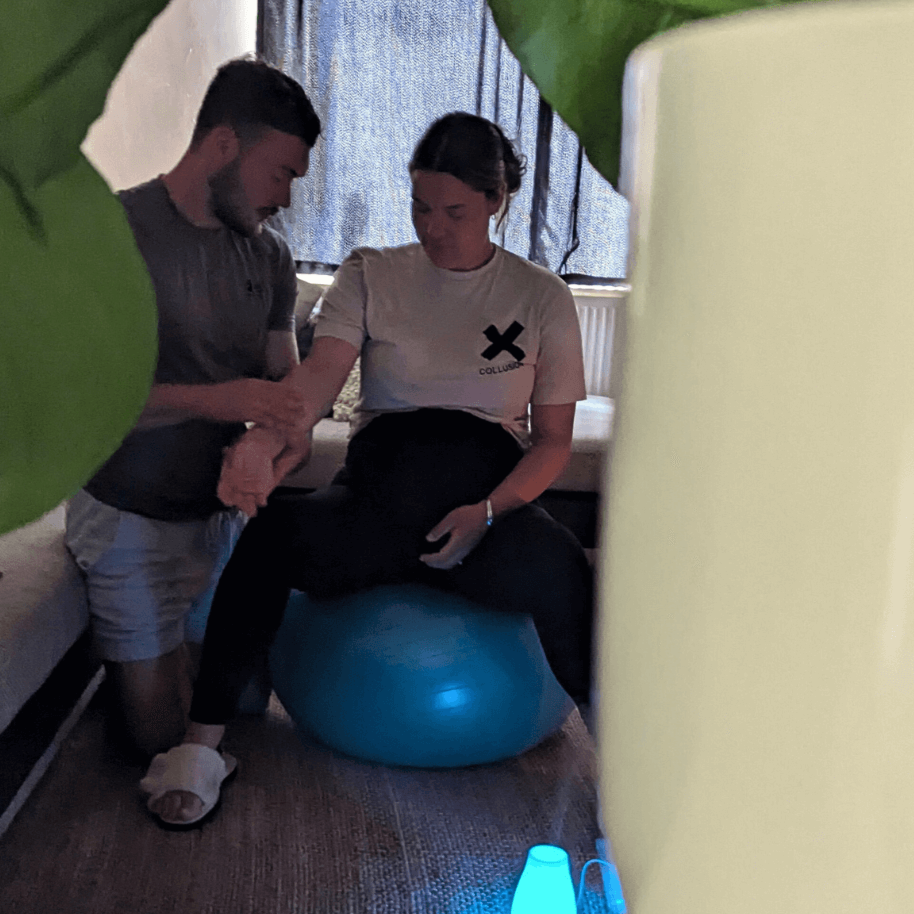
You have a birth partner for a reason…
Humans need other humans to feel safe and strong. That’s why your choice of birth partner is so vital for a positive pregnancy, birth and postpartum experience…
Rarely do humans choose to give birth completely alone.
Your are a herd mammal: we are programmed to find safety amongst those that can protect us and give us comfort. Your safe spaces would have been a place where your felt most at home, protected by familiarity and the tribe you trusted to keep you safe.
In days gone by, this would have been the cave, the village or within the home.
In your immediate presence would be the the women-folk you chose & trusted to guide you through the process: your mother, sisters, aunts, friends…
And around the outside of your space, the men-folk charged with keeping the space safe and free of danger until your baby had safely landed.
While the world has changed, taking us out of the tight knit community structure, our instincts at not.
Finding a safe space looks different to before. Depending on your perspective, perhaps you’ll lean towards…
home
birth center
hospital delivery suite
theatre
The place itself doesn’t so much matter as the feeling of safety.
And that’s why your choice of birth partners are so key.

Your birth partner or partners will be your safety cue and you can pick anyone you like to do this job for you.
Just as your ancestors did, you have the right to actively chose your birth partner to be part of that inner circle of support and protection.
Many people choose to have me as their doula because this is my specialism; they trust me to be able to help them in this way.
This skill isn’t exclusive to doulas though.
The right people will help to create the right circumstances and vibes that will help you to birth as positively as possible.

But choosing a birth partner isn’t always straightforward…
We don’t see & hear birth in the way we used to, which means most of us don’t have the skills to support it…
When thinking about birth support, it’s really important to remember these dates:
Hospital birth became the norm in the 1970s; before this the majority of births took place in the home.
Obstetrics was first recognised as a profession in the mid-1800s
Midwives required a license to practice from the 16th century,
But humans have been on earth for around 300,000 years.
Which means that babies were being born at home, in communities, for 299,944 years (roughly).
And 299,624 years without the support of recognised medical professionals.
Now, let me be clear: I am not anti-midwife or anti-obstetrics. Both were invented for a very good reason, the knowledge and skills they carry are incredible and the respect I have for their abilities is high.
But my point is that there was a lot of birthing going on before them.
And that was supported by cultural knowledge.
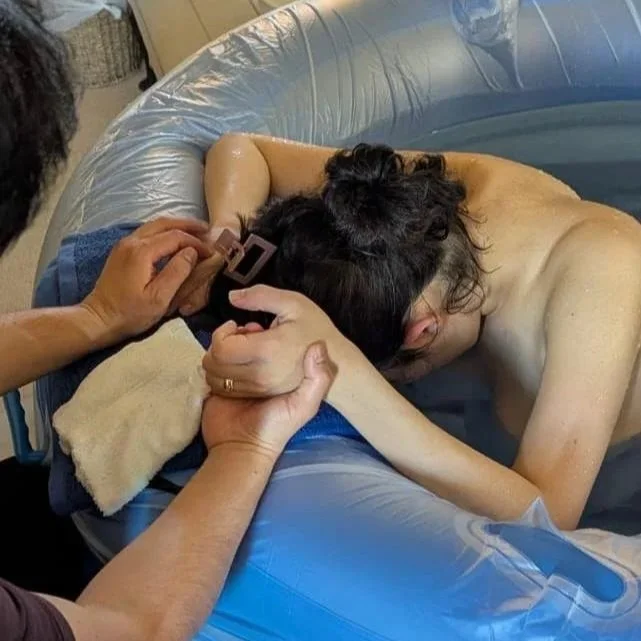
Brilliant birth partners make you feel safe and supported…
… but that doesn’t mean they’ll always know what to do.
So many of my antenatal clients contact me for this exact reason.
Partners know they want to be in the birth space. They know that they want to help. They just have no idea where to start.
Sometimes they feel embarrassed about this. I always remind them that there’s no need to be.
How could they know what they were never taught?
Since birth moved out of the community in the 1970s, the ability of the average person to know how to support birth confidently has been lost.
This is nothing to do with their abilities and everything to do with society.
Before the 1970s, the birth space was a learning space. Girls would have heard, seen and attended birth with their mothers, supported their sisters and friends, and learnt how best to help from the more experienced ones around them. They would have gained the skills and then have then passed onto other children.
The move into hospital meant restricting access: one or two birth partners, usually the father, behind closed doors.
This single social shift into hospital…
removed communities from the birth space
stopped families & friends from learning how to support birth
placed the responsibility for birth support on fathers with little to no knowledge of birth support
And one of the consequences of this is that - for a while - birth became a spectator sport.
An event to be observed by the person who drove you to the hospital.
But the tide is turning (and if you’re still reading), I know you believe this too.
Modern parents understand that positive births start with a feeling of safety, security and love.
They also understand that - particularly in a hospital setting - a birth partner is key to that.
More importantly, many birth partners are excited about giving active and useful support during labour.
The question though is this.
Without having seen, heard and supported birth before, and with no cultural knowledge to be handed down to them, how will the powerful birth partners in the wings actually know what to do?
And the answer lies in antenatal education.
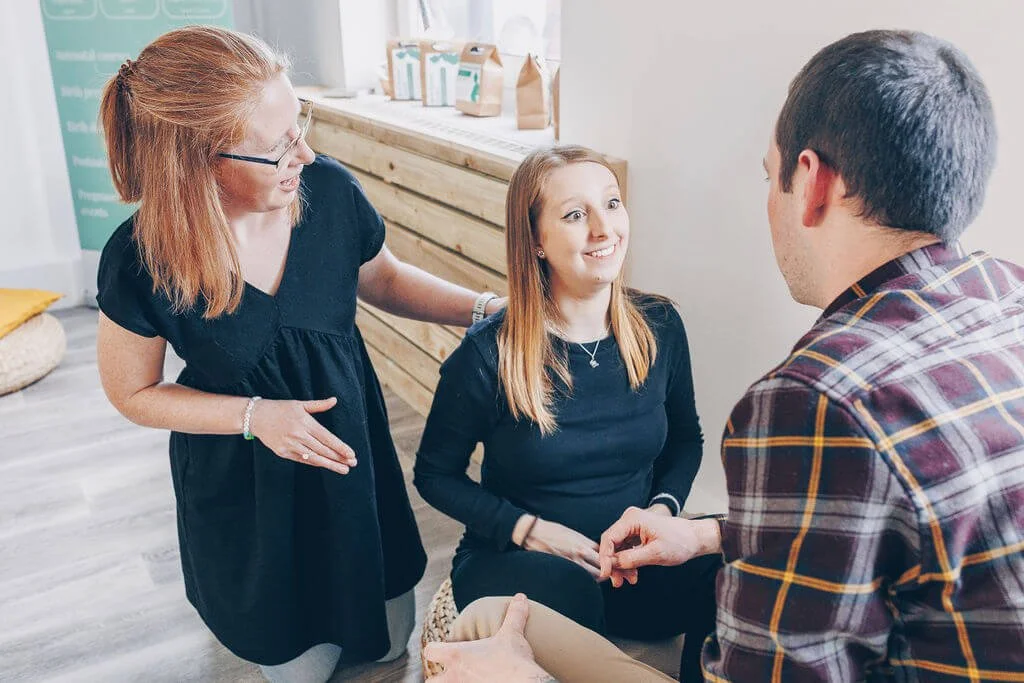
How can my birth partner prepare to help me in labour?
We don’t know what we haven’t learnt. Addressing that is the first step to brilliant birth support.
Time-after-time these four simple tasks are the ones that I see making the most difference to the birth partners confidence in my antenatal and doula families…
Task #1: Shift the mindset
Particularly for testosterone-driven men, supporting birth requires a move away from what they’d typically or automatically do.
Birth is an oxytocin-fuelled, highly emotive space; understanding the needs of a birthing brain is essential.
This podcast is an excellent starting point for any man preparing to be a birth partner.
Task #2: Learn some birth skills
Supporting birth means supporting the physical, emotional, mental and logistical unfolding of labour and delivery.
There’s a huge number of ways to do this: massage, aromatherapy, hypnobirthing strategies, positioning, advocacy …
Having a few of these in their ‘toolkit’ will benefit their ability to support labour & all are covered in my ‘Brilliant Birth Partner’ workshop.
Task #3: Watch real birth videos
It’s one thing to study birth - quite another to witness it.
Watching real videos and reading real stories is an important way for birth partners to prepare themselves for what their role involves & how they might apply the skills they’ve learnt.
I provide all antenatal clients with a hand-picked selection of really useful birth videos covering spontaneous, induced & c-section deliveries, in a variety of settings.
Task #4: Talk honestly & openly
Your birth partner’s role is to support you to feel as good as you can; that means knowing what you’re scared and worried about.
Carving out the time to dig into these fears, not with the aim of fixing or dismissing them, but with the aim of understanding possible ways of navigating them, can change everything.
If that feels tricky or hard to do, a Power Hour with me will give you the space and guidance to explore this more comfortably.
Birth partners can be game-changers when they know what to do…
As a doula, my role is never to take the place of the birth partner, but to make them feel as calm and confident as possible.
After all, this is their birth experience too.
Sound like the kind of support you’re after?
Book a free discovery call & we’ll talk about all the ways I can help you both prepare for your birth and baby adventure.
