
#19: Leni’s mama’s unexpected, raw and beautiful assisted birth story…
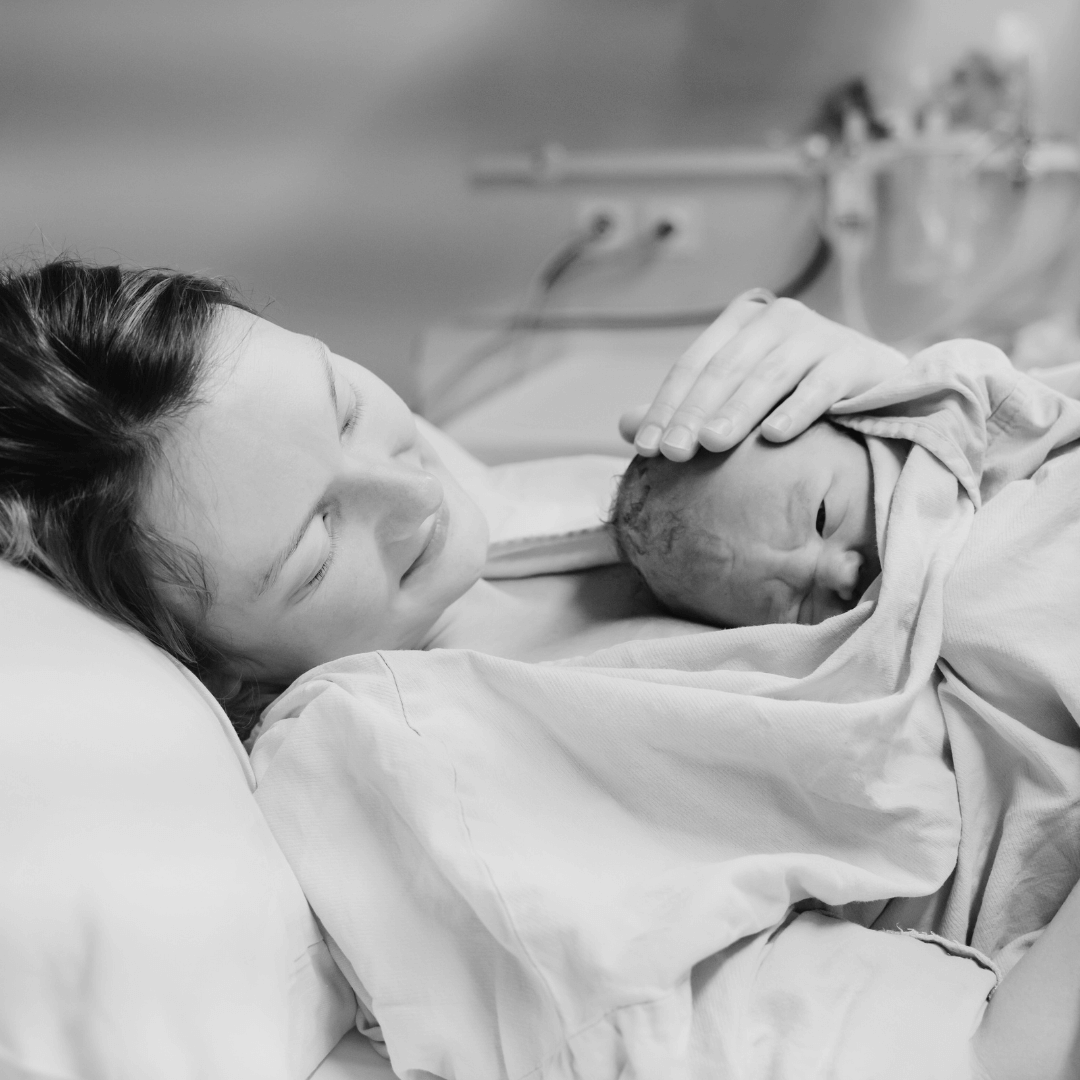
A birth plan is about the knowing, not the deciding: as Leni’s mama’s powerful story shows, doing the preparation means that you still feel knowledgeable and in control, even when things don’t go to plan…
Trigger warnings: please note that this story features discussion of premature rupture of membranes, altered birth plans, induction, episiotomy, forceps, ventouse & shoulder dystocia
Before we get to birth, let’s start at the beginning. How was your pregnancy?
I had a wonderful pregnancy: everything was very straight forward until the last week when I was unwell.
And, before the event, how did you feel about giving birth?
I did the ‘Positive Birth Company’ hypnobirthing course and felt good about it all.
Then the big day arrives. How did it feel when you realised your baby was on their way earthside?
We were so ready to have our baby girl with us we were so excited! Strangely I didn’t feel nervous at all for the birth.
So, how was your birth experience?
After a straightforward pregnancy and a meticulous birth plan to use the local birth centre, my birth couldn’t have been further from what I imagined! However, it was the most wonderful experience and I’ll never forget it.
My waters broke on 11th March 2023 after a week of latent labour and a horrendous UTI! I was told I’d have to be induced* the following morning if I didn’t go into natural labour - luckily I did and woke up at 1am with contractions.
We went into hospital at 7am and were taken to my room on the labour ward. I was in active labour for 6 hours, using gas and air for pain relief, before I was put on an oxytocin drip to increase the frequency and strength of my contractions. At this time, I asked for something stronger so was given an injection of diamorphine*. Following this, I slept between contractions and got to 10cm dilated without as much as a whimper (much to the surprise of my boyfriend who witnessed me cry my eyes out at my booking appointment as I had to have a blood test!).
At around 6pm, it was time to push and I gave it my all, however after an hour the midwives felt it was time for further intervention as I wasn’t making as much progress as they’d like and Leni’s head just wasn’t coming.
Doctors arrived and broke the news I would need an episiotomy and forceps - not what I had in mind! They began this process, only to find forceps were not going to work so switched to ventouse - which luckily did work, however Leni’s shoulder got stuck on the way. Through my gas and air induced haze, I heard the words ‘shoulder dislocation’. Something in my head just said I can’t let this happen to her and pushed the hardest I had all day, whilst midwives held my legs in the air - and then there she was, our beautiful daughter!
We had delayed cord clamping and a wonderful hour of uninterrupted skin to skin before I gave her her first feed.
Learning Point: the amniotic sac (your waters) is what keeps baby in a bacteria, infection-free space before they’re born. When the waters break, the chance of bacteria reaching them increases as there is no longer a barrier. This is a totally normal process, but when waters break with no signs of labour, many hospitals have a policy of inducing contractions (using an IV drip of syntocinon) to lower the chance of infection. The timing of this policy varies from hospital to hospital: some want to induce immediately while others have a tolerance of 24+ hours. And of course, there’s always the option to decline or refuse this offering.
Glossary: Diamorphine is an injected form of pain relief that belongs to the opioid family (think morphine, pethedine). It creates a woozy, sleepy, drunk feeling and - though it doesn’t remove the pain - alters your brains response to it to make everything feel more manageable. As with everything, there are side-effects including nausea, dizziness and it has the potential to affect your (and baby’s) breathing.
Do you remember what you said to your baby when you first met them?
I told her she was going to be an only child because I wasn’t doing that again!
Looking back, what was the best part of your birth experience?
The feeling of pride and achievement I got when I held Leni for the first time and the instant rush of love for her when I saw her face.
And on the flip side, if you could, what would you have changed about the way your baby entered the world?
Nothing!
If you could give parents-to-be one piece of advice about preparing for the birth of their baby, what would it be?
Just go with the flow and come to terms with the fact that your birth may not go as you’d planned*.
Think about it: in Leni’s mum’s case, there was a meticulously clear plan which meant that she’d explored all the eventualities and avenues, before settling on her preferences. This gave her the tools to understand what was happening when things went away from the plan. If this was you, would this approach to birth help you?
