
For families wanting a low-intervention ‘natural’ labour and birth experience, a home birth in Cornwall is a great option.
But as with anything, one person’s dream is another’s nightmare and making a choice that works means having the answers to as many questions as possible.
Here are the answers to the 7 questions most commonly asked by clients.
Read them, digest them and feel free to book a free discovery call to talk about any in more depth!
*all images shared with consent
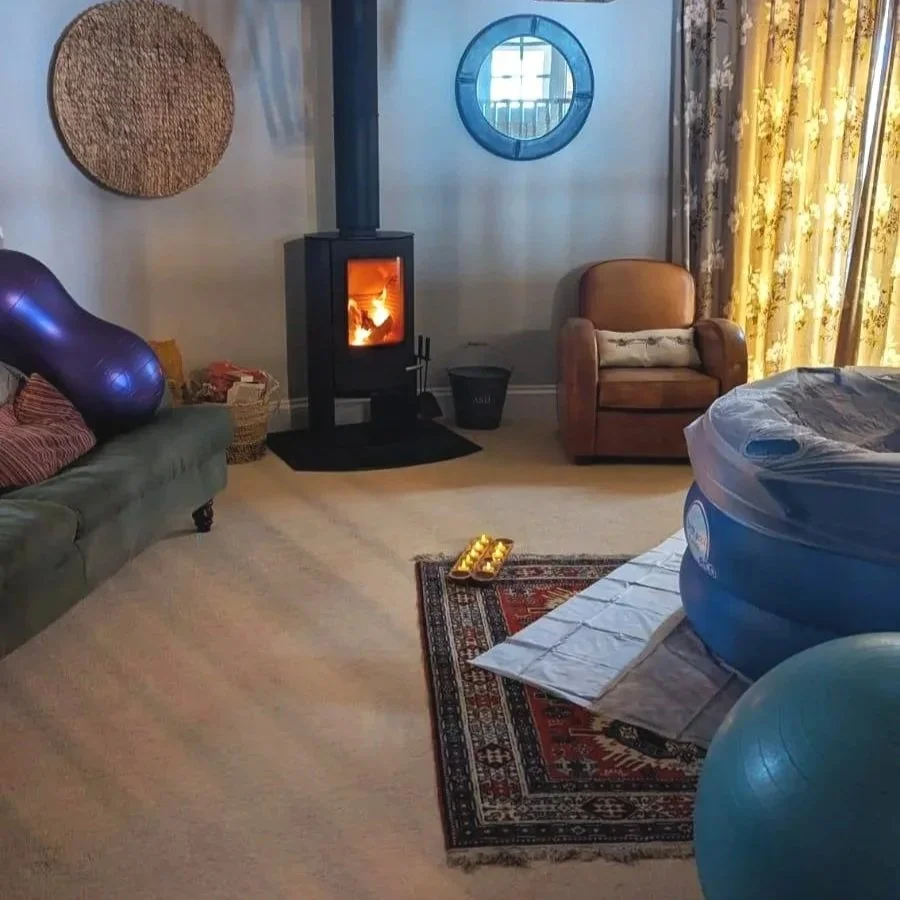
1. This is my first baby: is home birth a safe option for me?
Don’t take this the wrong way, but that depends on your definition of safety.
Birth is as safe as life ever is: there are always risks of something involved, and that’s as true for home birth as it is for hospital birth. As a doula, it is never my job to convince you of something, but merely to present you with the information and the support to make your own decision. So here goes.
For first-time mothers, the chance of something serious going wrong during a birth at home was 9.3 per 1000 births (0.93%)
For first-time mothers, the chance of something serious going wrong during a birth in hospital 5.3 per 1000 births (0.53%)
For second time mothers, the chance of something wrong at a home birth was no different to the chance of something going wrong at hospital.
But now we need to break this down:
Is there a chance that something could go wrong at home? Yes.
Is this also true of hospital? Absolutely.
Does the risk rise for first-time mothers choosing a home birth? Statistically, yes it does.
Does the risk for first-time mothers nearly double? Actually, yes it does.
BUT it’s not as simple as that.
In reality risk for first-time mothers with low-risk pregnancies remains less than one percent?
Giving birth at home also lowers the rates of medical interventions that carry other additional risks: episiotomy, induction, opioid and intravenous pain relief, instrumental delivery and caesarean.
And so, we come back to my initial statement about safety.
Labelling something as a safe option depends entirely on what your tolerance to risk is, and what you deem to be safe (or indeed, unsafe) for you and your baby.
But equally, it’s not that simple either because Cornwall is unique.
Our rural peninsula location also carries some other factors to be aware of when you’re making your own assessment of safety.
Transfer time from your home to hospital: is it just down the road, or have you got a long, winding ambulance journey ahead of you?
Midwife availability: how well staffed are the community and on-call home birth teams right now?
Time of year: winter storms, especially on the coast or way out West can make travelling tretcherous. Would you want to brave it in labour, or would you prepare to do it at home? And then of course there’s the summer traffic to consider…
Ambulance availability: again, peak summer time means a greater pressure on our services and availability in an emergency may be delayed or lessened.
Once you’ve weighed up everything (statistical likelihood of issues against your own tolerance of risk, the count-wide factors of the moment), you’ll soon know in your gut whether homebirth in Cornwall feels like a safe option for you.

2. If I choose home birth in Cornwall how likely is it to happen?
Honestly, there are a lot of variables to this and they’re not all to do with your body, baby or birth. So let’s dig into them…
When I am supporting families to prepare for a home birth in Cornwall, either in their antenatal class or as their doula I always highlight that there are three things that will affect the likelihood of a home birth actually happening:
The risk status of your pregnancy
The way your labour unfolds
Midwife availability
At the end of the day, it is always your choice as to where you have your baby. That is your legally protected right. However, logistics do come into it, so let me give you the lowdown on what sway each of these things have and what you can do about them.
The risk status of your pregnancy
If you are having a low-risk pregnancy then there should be no opposition to a homebirth.
Any ‘risk flag’ during your pregnancy, including health conditions, maternal age, VBAC or BMI at booking, is likely to mean additional chats around electing for a home birth. This is because these things go against what the trust’s guidelines say ‘should’ happen.
RCHT’s maternity department has a specific out-of-guidance team led by consultant midwives that lead on these chats and ensure that everyone is treated as an individual when making a decision that goes outside of the general guidelines.
These out-of-guidelines chats happen in advance of your due date. The agreed plan will be written into your electronic notes so that the midwives supporting you are aware of that plan.
The risk status of your labour
When you are in labour, you call triage as normal to notify them that things have started. They will send a pair of midwives to your home when you believe you need support & if you are in active labour then they would stay with you.
Their role is to monitor you and your baby’s health, provide gas & air pain relief, and to ensure everything is progressing smoothly. If everything is going well, a home birth is likely but if they feel that something is not going as expected, they may suggest transfer.
Common reasons for transfer to hospital during labour are requests for more pain relief (eg: epidural), potential signs of infection or long / delayed first or second stages of labour.
Midwives are duty bound to recommend transfer, however it is up to you as to whether you go or not.
Transfer to hospital will usually always be to the delivery suite (obstetric ward) rather than birth center; this is because the nature of the transfer usually means increased medical help is required. However, you can always request and negotiate a different destination.
If you are in active labour, the recommendation will be to transfer by ambulance. However, if you are not yet 4cm or deemed to be in active labour then transfer may be possible in your own car.
Midwife Availability
Many other NHS Trusts are suspending their home birth teams or have issues with availability. Cornwall is not in this position at this time and home births are still happening regularly in county.
But having said that, availability really depends on the route you’re taking.
If you are being supported by Cornwall’s NHS midwives, there is a chance that midwives might not be available to support all or part of your labour and delivery at home. Here’s why:
Homebirth midwives are community midwives (the ones doing antenatal & postpartum care) who are on-call to support homebirths. Four midwives are on-call at any one time across the county.
If two home births are already happening in the county, your home birth will not have any midwives to support you until they have finished supporting the other births or until another team becomes available.
When they’re called to a birth by triage, they will leave other appointments and/or their beds to come to you. They will usually have been scheduled to work a normal day and it’s unlikely that - if you call in the evening - that they’'ll be coming to you ‘fresh’.
Midwives have a maximum number of hours they can work before they have to be at home resting; if they max out their hours, they can call a relief team of midwives to come in. However if the relief midwives are already supporting a birth, then there will be no team to support you.
Midwives must work in pairs: to be supported in your homebirth, two midwives must be available and legal to be with you.
When no safe midwifery support can be provided, you’ll be advised to make your way or transfer to hospital, although whether you choose to do this or not is your choice.
If you are being supported by Cornwall’s private midwife, Katie and her partner midwife Mel, then the likelihood of midwives being available for your labour at home are very high; this is a big part of the reasons why people choose independent midwife teams as you’re employing them to be available for you!
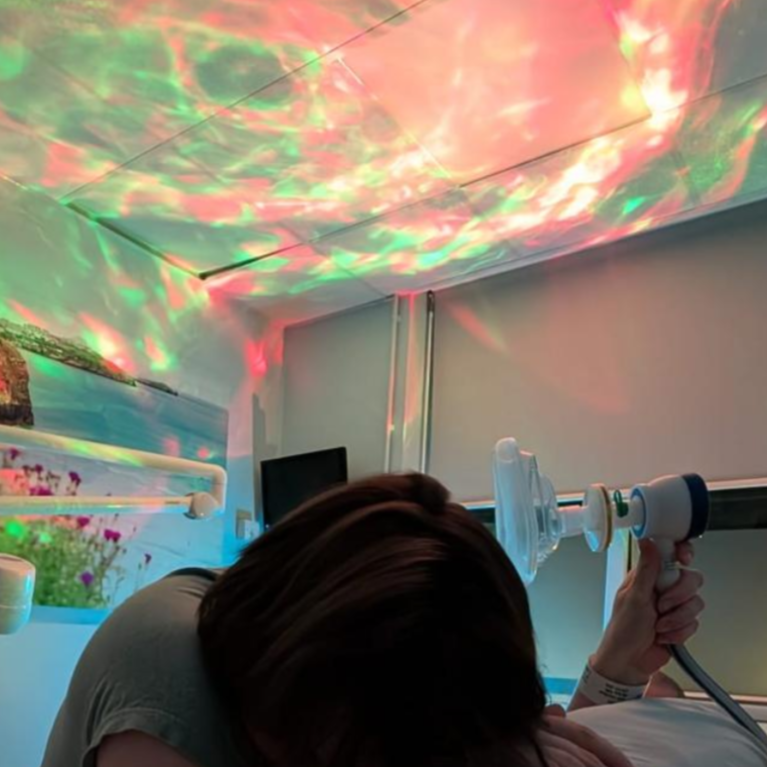
3. What happens if something goes wrong at my home birth in Cornwall?
The quick answer is that you’d transfer to hospital but honestly it’s such a big question. Answering it comes down to two key bits of knowledge.
Midwives are trained and equipped to look for and support birth emergencies or situations:
Things rarely go wrong in an instant; though labour, your midwives will be monitoring you and baby to make sure things are going smoothly. If they have any worries or doubts about this, they’ll be letting you know asap and advising transfer before things become an emergency.
However, it is possible that something could go awry quite quickly; midwives are trained to deal with this and to support the health of you and your baby at home as well as they can before emergency support arrives.
Women in labour one of the prioritised groups for ambulance attendance:
If midwives call for an ambulance, generally they’ll be coming as quickly as physically possible. Of course this will depend on the issue - if you’re transferring because you’re tired and want an epidural, this would not be treated as an emergency, but any problems around the health of mother or baby would be escalated and your ambulance would be prioritised.
Since COVID, it has been standard practice to send a letter to anyone opting for a home birth in Cornwall explaining that ambulance waiting and transfer times may be unpredictable and/or delayed. This is something to consider but as with anything, ambulance availability changes hour-to-hour and is not something that can be predicted.

4. What pain relief can I use for my home birth in Cornwall?
There are some medications that midwives will bring with them to your home birth, but other than those it’s in your court.
The medical pain relief that midwives can provide at a home birth are the same as the ones found at Truro, Penrice and Helston birth centers: put simply, it’s gas & air.
At hospital, you may be offered paracetamol or codeine based tablets, or medicines like oramorph but it is unlikely that your midwife will be carrying these medications to a home birth.
Of course, if you have paracetamol or codeine based drugs at home you can use them (make sure you adhere to instructions and notify your midwife when you take them); these could also be prescribed for you in advance of labour if needed.
Other than these, midwives wouldn’t be able to offer any further medical pain relief options as they’d need a more medical setting to manage them. That’s why it’s common for people preparing for home birth to source and use things like:
A birth pool or warm shower
TENS machine
Wave combs
Aromatherapy
These are skills and resources that can help relieve pain and anxiety in all settings, homebirth or otherwise; I recommend every parent-to-be spends some time learning about them and how they can help before birth.

5. I want a water birth: where can I get a birth pool for my homebirth in Cornwall?
This is an important one!
Immersion in water is proven to help with the sensations of labour and water birth is an increasingly popular part of the modern parent’s birth plan. While Cornwall’s three birth centers (not the obstetric Delivery Suite) all offer fixed birth pools, having a birth pool at your home will mean you need to source one and all the necessary accessories yourself.
You have two options:
Hire your birth pool from me
Hire includes the pool and all the accessories you need to use it safely during labour and delivery. I deliver it to your home myself, at a time that works for both of us & explain how all of the kit works. I am also on hand via Whatsapp to answer any questions as and when they arise.
Hire your birth pool from a national supplier
Delivered by courier, different companies and packages will supply different sizes of pools and equipment to suit your budget and needs.

6. Can I still have a home birth if I am classed as ‘high risk’?
No matter what your medical status, you always have a choice. But this isn’t a black and white answer…
In simple terms, the more ‘risk factors’ you have, the more medical the birth pathway you’ll be recommended to take.
This is because guidelines exist, have been created in response to medical situations and need, and are then are applied universally.
Whether you take that path or create an out-of-guidance depends on what you want and need.
Asking your healthcare team these questions may help you to decide:
So I have a ‘risk factor’: is this something that IS wrong now, or suggests something MIGHT go wrong?
In terms of the possible negative outcomes for my risk factor, which ones are midwives able to manage at home? Which ones would be impossible to manage at home?
Is this advice you’re giving tailored to my body and circumstances, or just generalised for the group I fall into?
The likelihood of X happening is high: what can we do to bring the chance of it happening down?

7. Why might I not want a homebirth in Cornwall?
In a world where a home birth feels like the holy grail of births, it’s important to find balance.
Well over 90% of my doula and antenatal clients give birth in a hospital or birth center setting: more often than not, this is because after discussing the reality of all the options available, including homebirth, they feel like this is the right setting for them.
In most cases, people will move away from the idea of a homebirth because of the following:
They know they don’t deal well with pain; they want pethedine and epidurals to be an easily accessible option.
They feel safe in medical settings; they like the idea of being surrounded by medical professionals.
They want to labour in one place: the idea of a potential mid-labour transfer is too overwhelming.
They have small children at home: a hospital or birth center setting will create a quieter labour space.
Their home is too small for a birth pool; they want a water birth and room to move so they go to a dedicated birth center.
Why would a home birth client hire me - a doula who routinely works hospital - as their doula?
Simple. I know birth, I know the system and I am comfortable working with both. More often than not, a family planning a homebirth will approach me because they know that I have that balance.
My doula eyes and ears will always be focused on helping them to progress and cope with labour, bur if they have to transfer they want someone who can work with the system, not against it.
Curious about how I can help you? Book a free Discovery Call and we’ll chat!
