
#12: An anonymous amazing, scary but breath-taking caesarean birth story…
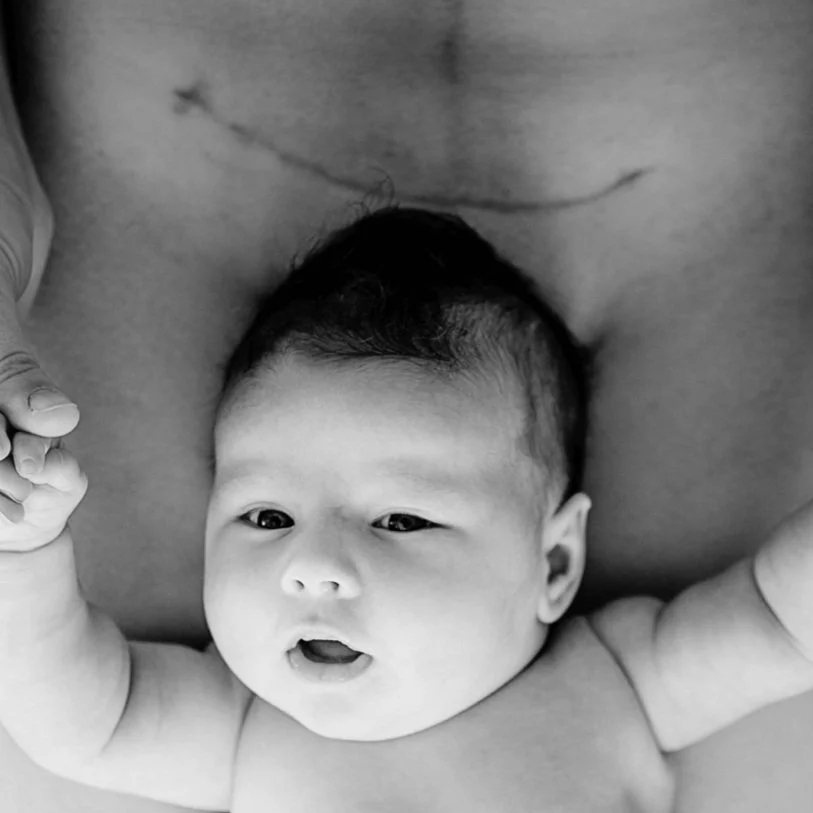
Sometimes, scary things happen during birth, but as our anonymous mother narrates, feeling seen, heard and valued by the midwives and medical professionals caring for us helps to make it a positive birth experience.
Trigger warnings: please note that this birth story discusses baby loss, heart defects diagnosed during pregnancy, NICU stays, difficulty bonding during pregnancy, induction and emergency caesarean
Before we get to birth, let’s start at the beginning. How was your pregnancy?
We had a very difficult pregnancy, early on we were told we would likely lose the baby. There were so many tests and scans, and a few trips to Great Ormond Street (the first we had 24 hour notice and were on public transport) and discovered that baby had a simple but substantial heart defect. We weren't totally sure what to expect at the time of birth but knew it was very likely it would involve a stay in NICU. We had also been told that it would be impossible to say exactly what was going on with her heart (and later also a cyst they picked up) until after birth, so I couldn't find my footing the whole way through.
All of that combined with the initial warning of potential loss, and being up for eviction because they needed to do work on the building, meant that I struggled to form a bond with baby. Constipation and heartburn were absolutely dreadful too so I felt physically bad as well as mentally and emotionally.
But on the plus side, throughout everything my husband and I pulled through and somehow ended up even closer than before. We were both very mindful of each others positions and it strengthened us so much more than I could have imagined.
And, before the event, how did you feel about giving birth?
I did the perineum massage* to prepare, and an online hypnobirthing course. I knew I didn't want the injection for my placenta but was pretty easy going on the details.
Glossary: perineal massage is an type of self-massage used during late pregnancy that some believe helps to prepare the perineum and vaginal opening for birth, potentially reducing the risk of tearing. A step-by-step guide can be found here.
Then the big day arrives. How did it feel when you realised your baby was on their way earthside?
We were induced a week before my due date so they could monitor baby's heart throughout labour, and it was such slow going!
I arrived Monday and by Wednesday afternoon was finally ready to go down to labour ward. After mentioning twice over the few days that I thought MAYBE my waters had started to go but nobody checking, I had given up on the idea it might happen. They kept referring to contractions as "tightenings" so I didn't actually realise it had started and went down to the restaurant for an uncomfortable coffee. When I got back upstairs and was told that I am actually in labour now I had a bath while they prepared for my arrival at the other end so it was all pretty relaxed. My overriding feeling was excitement that we were on to the final leg of a long and difficult journey, and the next step would be to meet our baby.
So, how was your birth experience?
So after the difficult pregnancy, and forcing some kind of a bond to start forming, it felt like the 3 of us were very much in it together. I like to be prepared, but had to accept that there was no way I could prepare when we didn't know how long induction would take*, or how long we might be under care of NICU. I got myself worked up several times before I realised that the only thing I could do is guess, hope and work it out as it went along. Fortunately a friend in the area was on hand to take my clothes and wash/dry and return them to me.
The induction itself was so long and boring, I spent so much time walking up and down to the café. The insertion of pessaries were particularly uncomfortable; it doesn't matter how much they say to relax, as soon as someone starts rummaging around your cervix like they lost their car keys in the bottom of their handbag things tense up. Once we had established labour was under way the bath really helped relax my body and reset any grumpiness I felt at not knowing what had been happening up until that point.
One thing that makes sense in hindsight, but I hadn't realised was a thing, is that when your innards keep contracting that can cause vomiting. I projectiled all down myself, all the way down to my feet. I felt so bad for the midwife who was covering break at the the time, she really got the short end of the stick. The staff were all lovely though.
I took them up on the epidural, not because I felt like I needed it at that point, but because I didn't want to miss the opportunity and regret it. That went really smoothly and helped a lot, but the machine was broken so it wasn't auto-dosing and I had to wait for the anaesthetist to be available and come top me up, but I had gas & air as well so I managed some sleep. When the time came, baby was back to back and they weren't sure if intervention would be necessary or not, so we went to the operating theatre just in case. They couldn't rotate baby, although 2 different people tried, and she had come too far and got a little wedged, so they had to push her back in with a balloon and do an emergency C-section.
When she came out she wasn't breathing and her limbs were blue. It felt like forever until she finally let out a proper cry (paperwork later showed that had been around 20mins). They rolled her in a towel and wheeled her past me, then came back to balance her on me for 2 minutes so we could get a photo, then rushed her off to NICU, followed by her dad. I was taken to post-op then back to a ward to regain movement in my legs.
The first night without a baby by my side was impossible but I mentioned this and was put in a side room so I didn't have to listen to babies crying all night. It was a big realisation for me that if I needed something, just voicing it would typically get things in motion to be sorted. I would definitely request a side room sooner if I was in that circumstance again, rather than trying to push through because somebody else probably needs it.
Overall, the whole experience was just hurdle after hurdle, and nothing went according to any plan that we might have had. But we kept tabs on each other the whole way through pregnancy and birthing (the epidural was especially difficult for my husband after a medically traumatic childhood caused phobia of needles, and he had to read through the "what's about to happen" sheet for me) and both felt cared for, seen and heard.
I had fully researched all eventualities so I knew what to expect in the operating theater and everything. Removing all of the possible unknowns gave a feeling a control in a situation where anything could happen. The hypnobirthing course also helped massively with perspectives and keeping a positive mentality throughout, which I think was a cornerstone of the whole experience being as enjoyable and exciting as it was.
It probably also helps that we have a ridiculous sense of humour too, because everything is easier with laughter.
Learning point: inductions are designed to prompt the body into labouring by itself, rather than making labour happen. Therefore the length of time an induction takes, or whether it works at all, depend on how ‘ready’ the body is to go into labour. If it is very ready, induction may go quickly and smoothly, however if it isn’t ready, induction may take days and may not work at all.
Do you remember what you said to your baby when you first met them?
"Oh aren't you perfect!?"
Looking back, what was the best part of your birth experience?
Finally being able to hold her later that day.
And on the flip side, if you could, what would you have changed about the way your baby entered the world?
I would have pushed for further investigation when I first thought my waters went, and potentially have avoided baby being born with "suspected sepsis". I would also push for a side room before sending the night in a room where everyone else had their baby and I didn't have mine. Oh, and I would have requested gas and air every time they were shuffling pessaries!
Think about it: advocating for yourself - being prepared to push for the information, support and care you want - is a huge part of giving birth within a healthcare system. But this is no easy feat: we’re so used to obeying and following doctors’ orders that it can lead to us doing as we’re told, when instincts tell us otherwise. Planning for this makes it easier: pick birth partners who are comfortable doing this and get used to practising advocacy skills from the very start of your pregnancy so it feels less ‘icky’.
If you could give parents-to-be one piece of advice about preparing for the birth of their baby, what would it be?
Research what to expect under any circumstances, even if they aren't ones you would choose.
