
My doula guide: finding rest during pregnancy, birth & postpartum…
FYI: this blog post is NOT going to tell you to sit down or sleep when the baby sleeps. It doesn’t take a rocket scientist to see that advice for the the simplistic rubbish it is.
Spending my life supporting the pregnant, birthing & postpartum families of Cornwall has taught me a few things about rest. These are the bits that every expectant or new parent needs to know.

Fact: we are all biologically programmed to find rest…
… but the way we do that will always depend on the life we are living.
Rest is not something we learn how to do: it’s part of our DNA.
No, really.
Even at your conception, the mechanisms that exist to create and sustain you found moments to pause and regenerate.
The egg rested for around 30 hours after arriving at it’s fallopian tube destination. Equally, while those first sperm entered the fallopian tubes just minutes after ejaculation, they bided their time. Motile sperm can survive in the reproductive tract for up to 5 days suggesting that fertilization isn’t the mad rush we imagine it to be.
So it’s obvious, isn’t it?
Rest is something your whole make-up has been doing from the moment you came into existence.
Therefore, it’s reasonable to conclude that resting is not something that we need to be taught.
BUT it is something that the way we live has made us lose touch with.
As a doula & a mum-of-two, I know that rediscovering this natural ability is not optional if we want to thrive, rather than simply survive.
Especially when it comes to the periods of pregnancy, birth and postpartum.

Rest is not for the weak …
… it’s just that society has told you that it is. That has consequences of it’s own for pregnancy, birth and postpartum.
Think about when you felt your most tired, utterly exhausted and unable to function.
Be that at work or at play, this isn’t you working at the edge of capacity (like perhaps, doing an hour of overtime) but at the edge of tolerance (where you can’t figure out how to put one foot in front of the other).
At these moments, its not just a physical sensation of sleepiness, but an emotional weight too.
Tension rises, irritability increases, irrationality dominates as our body and mind scream to be somewhere else.
As an ex-secondary school teacher I remember this well. I also remember how normal it was to feel this way, particularly around 3pm on a Friday afternoon.
Our society teaches, expects and holds us accountable to pushing ourselves. In so many situations, how many hours overtime, how late we party, how little sleep we have is important: it defines our worth & value.
The truth really is that it’s normal and accepted to push beyond what we feel capable of and into the edges of tolerance.
This isn’t normal tiredness.
It’s burnout.
This comes from our culture of productivity: to be ‘not doing’ is to be weak, and therefore is to be avoided.
When you are sleeping or resting, you are incapable of being productive - which is ‘bad’ - and so the mantras appear…
Sleep is for the weak.
I’ll rest when I’m dead.
And this doesn’t stop when we become pregnant, or disappear when labour starts or when you bring your baby home.
In pregnancy? Exhaustion is rife.
I’ve lost count of the number of antenatal families who’ve told me their week has been crazy busy - at work, with family and DIT renovations - and they basically dissolved into a sofa on Friday.
And postpartum? Well it happens there too.
The nap break that’s needed to tackle the laundry pile, the snatched moments of phone-based productivity during tummy-time or a breastfeed that gets you ticking things off the list.
Just as we live our lives before babies pushing, so do we go into parenthood in the same way, creating to-do lists and expectations around being active and productive that we keep working through until we can’t do any more. The nursery. The baby-showers. The working as long as we can. The huge list of baby groups.
The problem is made even bigger by the fact that this timeline of pregnancy, birth and postpartum has absolutely zero buffer zones and therefore no time to recover. The promise of ‘I’ll rest when…’ often gets lost amid the to-do list and so what was once a potential quick fix level of tiredness, rises into something more chronic which then becomes so much harder to recover from.
But the survival mode we’re now in doesn’t see that. It keeps us moving forward because that’s what survival mode is for and does best. It’s a perfect circle really.
Please know that I am merely observing, not criticising: I did this too… probably harder and more extremely than most.
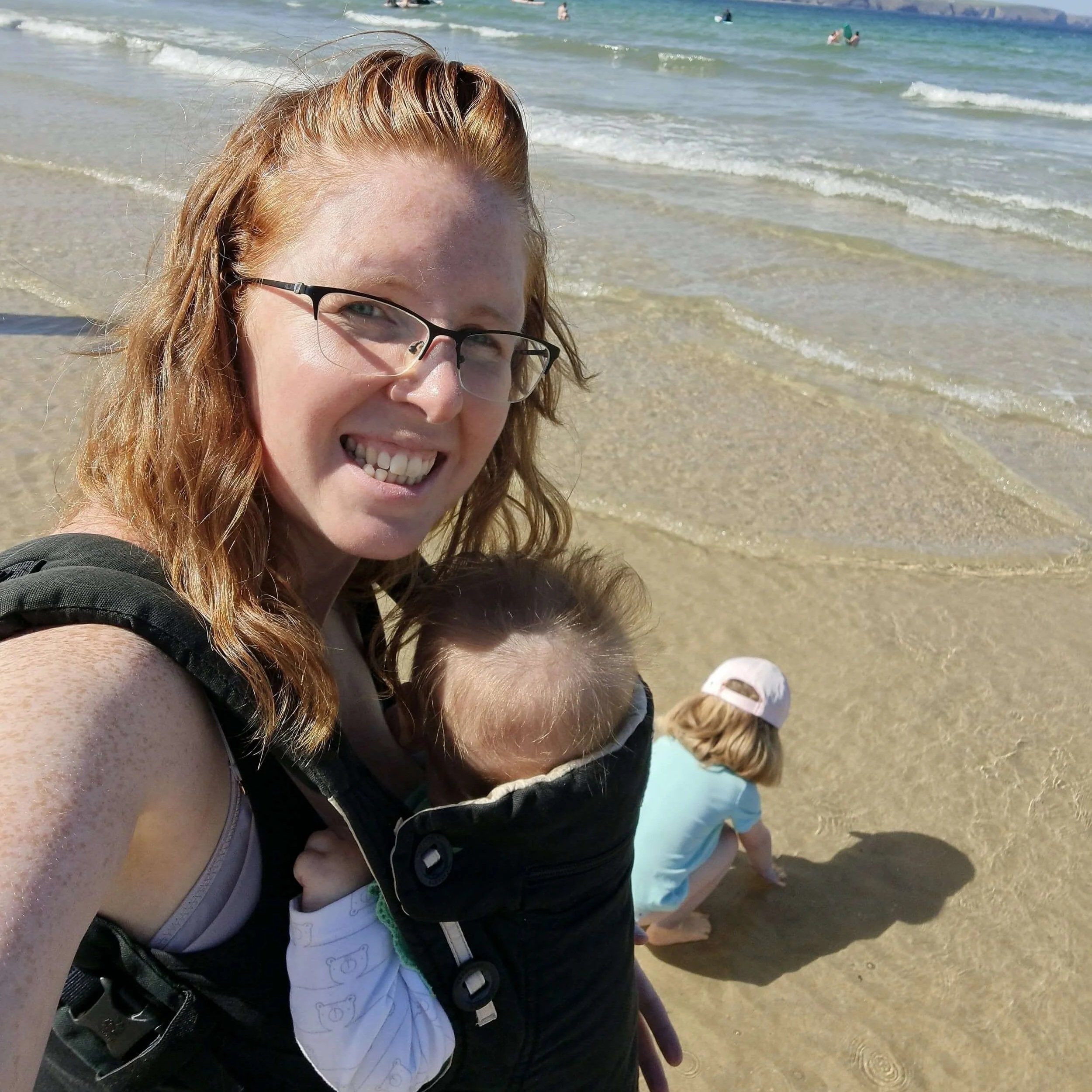
For years, I lived with depletion. I remember the shakes, the brain fog, the weird vision, the anxiety that bubbles away in the background.
Every day, I see it within my Nesters and the pregnant and postpartum folk of Cornwall.
I know how hard it is to feel strong, capable and confident when you’re running on empty (and have been for months, and are facing countless months more), but also to battle the expectations and prioritise rest.
This reality is a hard one to get your head around, but important if you’re going to get a handle on it.
The stupidity of the ‘sleep when the baby sleeps’ advice isn’t in the suggestion itself, but how out of touch it is.
You’ve spent your whole life in a culture that pushes you forward to be productive.
Inventing the wheel now, when your life is already in a massive state of flux is not a reasonable expectation.
But neither do you deserve to be a broken husk of a human.
Resting will make your pregnant and postpartum life better but only if it comes without the guilt of not doing enough.
That’s exactly why I tell people to find opportunities for relief and rest in ways that feel more comfortable for them…

Rest is not for the wicked…
… it allows your body to restore, regenerate and renew itself. That happens on a hormonal level.
Rest isn’t nothing and it’s not weakness. If anything, it’s the thing that makes you stronger.
To understand this, we need to go back to those signs of burnout…
Tension rising
Irritability increasing
Irrationality dominating
Think about these as sleepy cues in a newborn: this isn’t a sign that we might need to put them in their crib and sing a lullaby.
These are signs that they’ve gone beyond sleep and into survival mode: adrenaline and cortisol have flooded their system to keep them going. They’re overtired and beyond a simple sleep.
And this is something that I see in my antenatal, postpartum and Nester families: the idea that even if they had time to sleep, they wouldn’t be able to.
Not restfully anyway.
When the threshold of capacity has been crossed and you push into and towards the edge tolerance, rest is no longer about sleep. It’s about hormonal relief.
And relief takes a different angle to ‘rest’ because it’s about reduction and joy, not an unproductive pause:
reducing the ‘threats’ and stress to allow your nervous system to rebalance
creating calm and safety to regulate your stress hormones
giving time and space to prioritise recovery of the mind and body
prioritising sensory comfort to help relieve intense emotions
None of that is passive or lazy.
Each one creates a focus on actively supporting and doing something to providing relief and making things better.
But during the already manic time of pregnancy and postpartum, it’s got to be done in ways that are achievable, realistic and sustainable…

Four realistic and workable ways to find rest and relief…
… wherever you are on your pregnancy, labour and postpartum journey.
1.Box Breathing
Do it… in the waiting room for your midwife appointment, on your way to the birth centre and in those moments when your baby is demanding all of your attention. It’ll lower your adrenaline, refocus your mind and ground you in the moment.
To do it: breathe in for four counts, hold it for four counts, breathe out for four counts, pause for four counts. Repeat until you get lost in the rhythm.
Make it even better by: visualising a counter moving around the edge of a square or box at the same pace as your breath.
2. Sensory 5,4,3,2,1
Try it… when you’re feeling overwhelmed in the pram shop, as you walk into the maternity triage unit and as you rock your baby to sleep for the 678th time. It’ll create an all important pause in the barrage of information and thoughts that are surrounding you, thus lowering adrenaline and cortisol levels.
To do it: in your head list five things you can see, four things you can touch, three things you can hear, two things you can smell and one thing you can taste.
Make it even better by: pondering how each one of those things makes you think or feel in that moment.
3. Purposeful Pauses
Try it… when you know you have a busy day ahead of you, be that nursery decoration, birth planning or playdates. By disrupting the treadmill of life, it’ll give you brief moments of time to reflect and regroup.
To do it: choose blocks of time to simply stop. Some people call these ‘buffer zones’ between activities. It could be 3 minutes, it could be 20, but however long it is create a focus to that moment (eg: listening to a certain song, putting your phone away, stepping outside and listening to the environment) that allows to you create a definite stop in what you were doing.
Make it even better by: scheduling several of these into your day to create routine moments that allow your adrenaline to drop.
4. Sloppies
Try it… every single day of the week. Everywhere you go.
To do it: go through your wardrobe and take out anything that is tight, uncomfortable, scratchy or generally miserable to wear. EVEN if it looks nice.
Replace them with items (that my family affectionately call sloppies) which make it feel like you’re being hugged. Think soft fabrics, accommodating waistlines and seams, happy temperatures and zero adjusting. The kind of clothes that may not make you feel like a model, but make you feel super happy on the inside.
Make it even better by: using colours and patterns that bring you joy or make you feel stylish.

My priority is always to make the reality you’re living lighter and more manageable.
What that is, what those solutions are, will never be about me telling you what to do. Whether that’s pregnancy, birth or postpartum, my mission is to get a handle on your reality, and tailor what I do I give you what you need.
The result? Strategies and support that makes a difference.
Sound good? Get in touch and we’ll start the conversation that could be the game-changer you’re looking for.
